

Supporting Your Spiritual Awakening - Personalized Spiritual Coaching
What is spiritual awakening, and what are some common questions about navigating a spiritual awakening? Explore with international shamanic teacher, John Moore.
As we journey through life, some moments can only be described as spiritually transformative, challenging our perceptions and bringing us into a new realm of consciousness. Often referred to as a "spiritual awakening," these experiences can be profound yet confusing and overwhelming. The road to spiritual awakening is as unique as each of us. It is filled with personal lessons, growth, and revelations that shape our perception of the world and our place within it.
Common Questions I get from people going through spiritual awakening:
I think I’m having a spiritual awakening experience; how can I be sure?
I have profound spiritual experiences, but then they go away, how do i stabilize or deepen my experiences?
How do I know the right spiritual path for me?
Why is the experience so rough? Am I losing my mind?
How do I continue to lead my normal life after enlightenment?
My own journey of spiritual awakening began many years ago, ignited by a deep sense of curiosity and longing for connection. I found myself yearning for a spiritual truth beyond the physical world. This desire led me down a path of exploration and discovery to pursue a more profound understanding of life, consciousness, and existence.
However, the path of spiritual awakening is only sometimes smooth. We may uncover our buried parts as we perceive a more profound reality. These "shadows" can be disorienting, causing disturbances that distract us from our journey. Hence, navigating our spiritual awakening with compassion, understanding, and wise guidance becomes crucial.
This is where I step in as your spiritual guide, not as a guru, but as a supportive companion who has traversed similar paths and can provide valuable insights. My online coaching program, specially tailored to the modern woman seeking to deepen her spiritual journey, offers personalized guidance through the complexities of spiritual awakening.
Understanding Spiritual Awakening
Spiritual awakening is a profound shift in consciousness, where one begins to see life from a broader perspective beyond the physical realm. It often involves understanding our interconnectedness with all life and realizing the metaphysical nature of our existence. However, these experiences can be unsettling, causing confusion and internal conflict as our old paradigms crumble.
Through the coaching program, we explore your unique spiritual experiences, understand their meanings, and help you integrate this newfound wisdom into your everyday life.
Deepening and Stabilizing the Awakening Experience
As your guide, I'll support you in deepening your awakening experience. We'll explore tools like meditation, mindfulness, and contemplative practices, which can bring stability and clarity during this transformative journey. We'll also discuss the teachings of renowned thought leaders like Eckhart Tolle, Byron Katie, Brene Brown, and Deepak Chopra, whose wisdom can illuminate further.
Shadow Work and Avoiding Spiritual Pitfalls
When embarking on the spiritual awakening journey, our shadows—the unconscious, repressed aspects of ourselves—often come to light. Although confronting these parts can be uncomfortable, it is necessary for holistic growth and healing.
In the coaching program, we engage in compassionate and non-judgmental shadow work. We work to acknowledge, understand, and heal these aspects, reducing disturbances in your awakening process and bringing you closer to a state of inner peace and self-acceptance.
Your Personalized Spiritual Evolution
Ultimately, spiritual awakening is about personal evolution. It's about embracing a holistic view of life that aligns with your most profound truths. Through this coaching program, I aim to support you on this unique journey, helping you evolve at your own pace and in your own way.
You can explore your spiritual path in a safe, nurturing environment through one-on-one coaching sessions and with the optional support of like-minded individuals in a group setting. Whether you're in the early stages of awakening or seeking to deepen your existing journey, this program offers a guiding light.
Your Journey Awaits
Embarking on a spiritual awakening is a beautiful journey, but it doesn't have to be solitary. As your spiritual guide, I'm here to provide supportive, personalized guidance. If you're a woman seeking to deepen her spiritual journey, resonate with the wisdom of thought leaders, and passionate about personal evolution, I invite you to join me on this transformative journey.
Reach out today, and let's discover the unique path that awaits you in your spiritual awakening. Your journey toward inner peace, self-understanding, and spiritual evolution is just a conversation away.
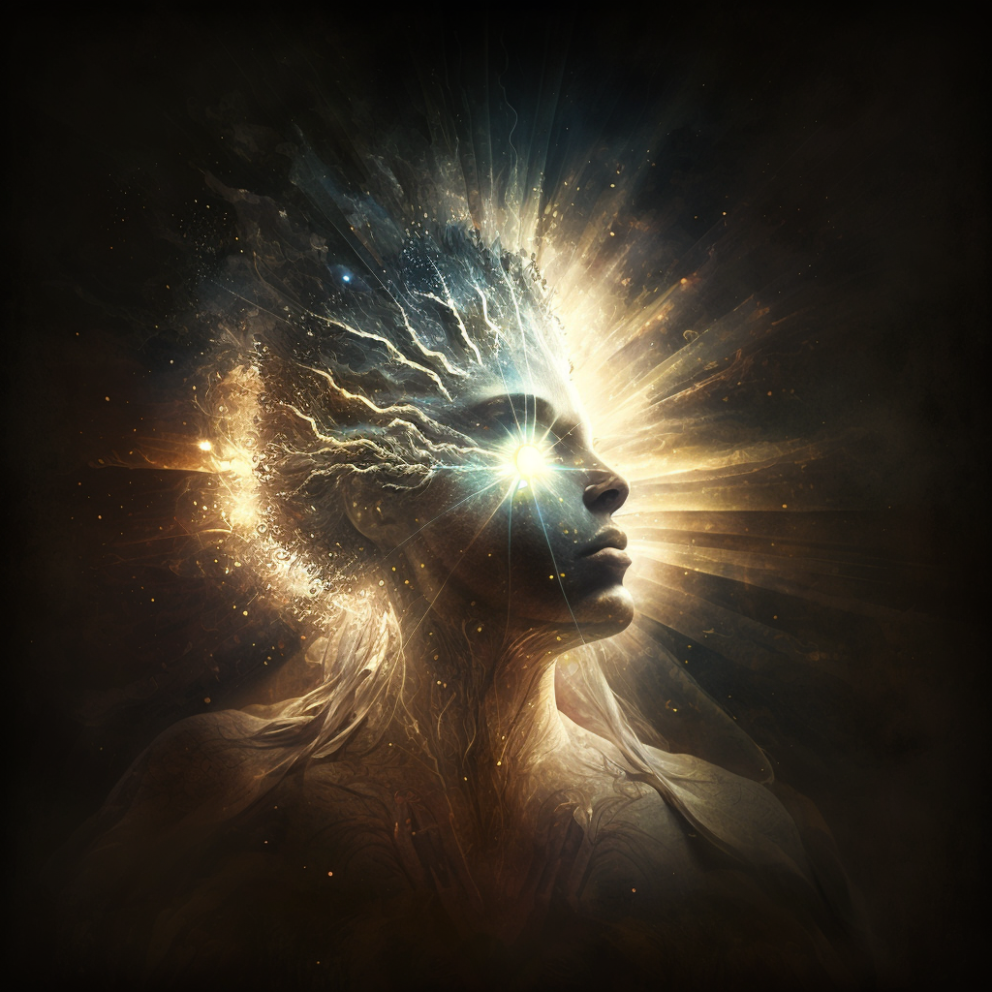
Bridging the Gap: Exploring the Intersection of Spiritual Awakening and Mental Health
The signs and symptoms of sp[ritual awakening overlap with those of certain mental health diagnoses. How does one distinguish between spiritual awakening and mental health?
Note: I am a spiritual teacher, not a licensed mental health professional. Seek the guidance of a qualified and licensed professional for all of your mental health concerns.
There has been growing interest in understanding the relationship between spiritual awakening and mental health in recent years. While these two realms have often been seen as distinct, emerging research and anecdotal evidence, they may be more interconnected than previously thought. In this blog article, we will delve into how spiritual awakening and mental health intersect and how recognizing this connection can lead to a more holistic approach to well-being.
Defining Spiritual Awakening and Mental Health

Spiritual awakening is a process of personal growth and transformation. It's marked by increased well-being, personal development, interconnectedness, and transcendent experience. Spiritual awakening experiences vary depending upon the individual, some may stabilize as a person's everyday way of experiencing the world, and some are fleeting.
Mental health is a state of emotional, psychological, and social well-being that enables individuals to cope with life's challenges and realize their potential effectively.
The fundamental well-being that accompanies spiritual awakening differs from the personal well-being that accompanies a good state of mental health. Fundamental well-being or "okayness" is a sense that, no matter what is going on in the outside world, everything is essentially OK, just as it is. It is a sense of serenity or imperturbability.
Shared Features of Spiritual Awakening and Mental Health Experiences
One of the challenges that people sometimes face is that there are shared experiences between spiritual awakening and mental health experiences, such as psychotic breaks. Some include altered states of consciousness, intense emotions, and strange or altered perceptions.
As stated, these shared characteristics can sometimes make differentiating between spiritual experiences and mental health challenges challenging.
The Dual Nature of Spiritual Experiences

While spiritual awakening tends to leave one in a state that is more blissful and loving than you were before, spiritual experiences are not always gradual and enjoyable.
Some people pass through a "Dark Night of the Soul," which can bring depression or highly stressful experiences. Spiritual initiation sometimes comes from a health, mental health, or life situation crisis.
Sometimes there is a struggle with the ego as you release your attachments to it. The ego is a survival mechanism; lessening the attachment can feel like an existential threat. This can cause fear and stress. Sometimes this also comes with a decrease in the need for approval from others, which can affect interpersonal relationships.
The Difference Between a Psychotic Episode and a Spiritual Experience
Over the years, I have had many people contact me during a psychotic episode and thought spirits were attacking them, etc. I do my best to direct people to seek medical care when this is the case. Shamanic healing is not a replacement for medical or therapeutic care.
Distinguishing between a psychotic episode and a spiritual experience can be challenging. Both may involve altered states of consciousness, unusual perceptions, and intense emotions. However, there are some key differences to consider:
Context: Consider the context in which the experience occurs. Spiritual experiences often happen with religious or spiritual practices, such as meditation or prayer, or during personal growth or transformation. In contrast, psychotic episodes are typically associated with mental health disorders, such as schizophrenia or bipolar disorder, and may occur without any specific trigger.
Duration and frequency: Spiritual experiences tend to be transient and episodic, whereas psychotic episodes may persist for extended periods and recur more frequently. Psychotic episodes can also be accompanied by a decline in overall functioning, including disruptions to one's social, occupational, and daily living activities.
Content and coherence: Spiritual experiences often involve themes of interconnectedness, love, and transcendence and may lead to a sense of clarity or insight. On the other hand, psychotic episodes may include delusions, hallucinations, or disorganized thinking that can be confusing, bizarre, or frightening to the individual and others.
Impact on well-being: Spiritual experiences are generally associated with positive outcomes, such as increased self-awareness, compassion, and personal growth. In contrast, psychotic episodes can lead to significant distress, impairment in functioning, and potential harm to oneself or others.
Response to treatment: Psychotic episodes often improve with appropriate mental health treatment, such as medication and therapy. Spiritual experiences typically do not require treatment, but individuals may benefit from support and guidance from spiritual mentors, communities, or therapists who understand the spiritual context of their experiences.
It is essential to consult with mental health professionals when attempting to differentiate between a psychotic episode and a spiritual experience. A thorough assessment, including consideration of the individual's medical, psychological, and social history, can help determine the appropriate diagnosis and intervention.