
Shamanic Healing Training: A Comprehensive Guide for Those Interested in Becoming Healers
So, you want to become a shamanic healer? What do you need to know about shamanic healing training before you start seeing clients?
So, you want to become a shamanic healer? What do you need to know about the training involved?
Embarking on a journey into shamanic healing requires more than just an interest; it's a deep commitment to understanding the spiritual and energetic world surrounding us. Through shamanic training, you'll explore ancient practices that connect deeply with the natural world and the unseen forces that influence our lives. Not everyone who starts this path will become a healer, but for those who feel called, finding the right training program is crucial to embracing the healing powers that shamanism offers.
The Foundations of Shamanic Healing
At the heart of shamanic training lies the understanding that our world is profoundly interconnected. This foundational belief is crucial as you begin your journey, guiding you toward a training program that teaches techniques and immerses you in the philosophy and ethics of shamanic practice. It's about cultivating a relationship with the world rooted in respect, balance, and harmony.
Understanding Core Shamanism
Core shamanism encompasses the universal, near-universal, and standard features of shamanism globally. It involves learning to journey to non-ordinary reality, connecting with helping spirits and mastering the altered states of consciousness necessary for shamanic work. This aspect of shamanic training is foundational, providing the tools and insights to navigate the unseen world effectively.
Unless you are training with an indigenous teacher in that culture’s form of shamanism, yo will most likely focus on core shamanic practices.
The Essence and Ethos of Shamanic Practice
Shamanism is deeply rooted in the understanding that illness and suffering often have spiritual dimensions. By addressing these aspects, shamanic practice offers a path to holistic healing. It’s a journey of restoring balance, not just within the individual, but within the wider community and the natural world.
The Role of Shamanic Healing in Today’s World
In a time where modern life often disconnects us from our spiritual and natural roots, shamanic healing offers a bridge back to those essential connections. It provides tools for personal healing, community building, and environmental stewardship, reflecting the timeless relevance of shamanic wisdom.
Bridging Ancient Wisdom with Modern Life
Shamanic practices offer profound insights into the nature of health and well-being, emphasizing the interconnectedness of all elements of human life. By integrating ancient wisdom with contemporary understanding, shamanism offers a unique perspective on healing and living harmoniously in our modern world.
Key Shamanic Healing Techniques Explored
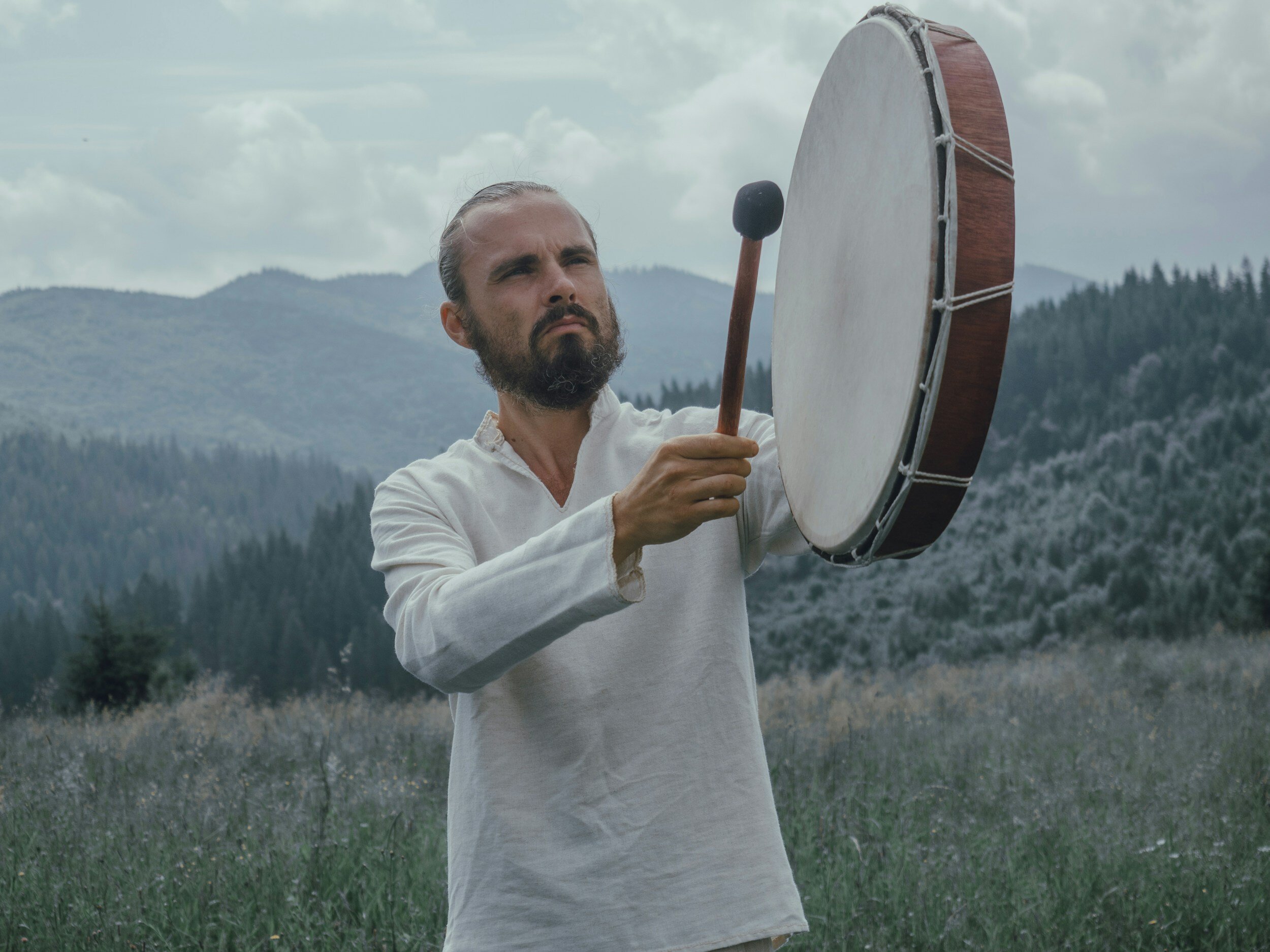
Shamanic healing encompasses a variety of techniques, each harnessing the forces of nature and the power of the spirit world to facilitate healing. From divination and soul retrieval to extraction and ceremony, these practices enable practitioners to address the spiritual aspects of illness and imbalance.
Shamanic Divination: Guidance from the Spirit World
Shamanic divination is a pivotal practice within shamanism, offering insights and guidance from the spirit world. Through this technique, practitioners gain clarity on the underlying spiritual aspects of a situation, enabling them to provide more effective healing.
Soul Retrieval: Mending the Fragmented Self
Michael Harner, a prominent figure in shamanism, highlights soul retrieval as a critical practice for healing soul loss, often resulting from trauma. This technique aims to restore the wholeness of the individual by retrieving lost parts of the soul, facilitating deep healing and recovery.
Extraction Medicine: Removing Spiritual Intrusions
Extraction ceremonies involves the removal of spiritual intrusions that may cause illness or imbalance. This ancient healing technique is a fundamental aspect of shamanic practice, aiming to cleanse and restore the spiritual purity of the individual.
Ceremony & Ritual: The Power of Sacred Practices
Shamanic cultures worldwide have long understood the transformative power of ceremony and ritual. These sacred practices serve to realign individuals with the spiritual and natural forces, fostering healing, community cohesion, and a deep sense of belonging across cultures worldwide.
Applied Shamanism: Practical Applications
Engaging with shamanism extends beyond personal growth to embrace a broader healing mission. Through practical applications, individuals can deepen their understanding and refine their skills, ultimately serving as healing channels in their communities.
Some institutions and schools may offer certifications in shamanic healing, but there is no real central authority or licensing body. We must practice integrity and ethics because that’s what the spirit demands.
Shamanic Healing in Practice
At its core, shamanic healing treats the spiritual roots of disease. By addressing these underlying causes, practitioners can facilitate profound and lasting healing, reflecting the holistic nature of shamanic wisdom and its practical relevance in healing work.
Deepening Understanding
You can deepen your understanding as a healer in several ways.
Reviewing session transcripts
Participating in shamanism retreats or drum circles
Reading ad taking additional classes
Connecting with a shamanic community
Plant Medicine in Shamanism
While I don't teach plant medicine, it's essential to acknowledge its significant role in many shamanic cultures. Plant medicine involves psychedelic plants and fungi to assist with spiritual and healing work. It’s legality and safety should be considered,
Shamanic counseling often incorporates plant medicine in healing ceremonies, reflecting its influential role in facilitating spiritual and physical healing. As a healer, I am often called upon by those who have tried plant medicine and need help integrating or who have been unable to get the healing needed. It is important that I can sit and hold sacred space for all of my clients.
Healing Circles: Collective Healing Energy
Healing circles are a core part of shamanic practices, drawing on the collective energy of participants to foster healing. In these gatherings, everyone's intentions and spirits unite in a powerful way, creating a supportive environment for emotional, physical, and spiritual healing. Engaging in healing circles can deeply enhance your connection to the community and the unseen world, making it an essential practice for those on a shamanism training path.
Advanced Shamanic Practices

As you delve deeper into your shamanic path, you'll encounter advanced practices that require a solid foundation in the basics. These practices expand your abilities and understanding, allowing for more profound healing and exploration of the spiritual realms. It's a journey of continuous learning and personal growth, pushing the boundaries of what you thought possible in your shamanic practice.
Working with the Ancestral Realms
Connecting with the ancestral realms involves the medicine wheel, a powerful tool in shamanic practice. This work allows you to heal ancestral wounds and learn from the wisdom of those who came before you. By engaging with your ancestors, you gain insights and guidance, enhancing your spiritual growth and strengthening your practice. It's a profound way to honor your lineage and carry forward their legacy.
Psychopomp Work: Assisting the Dying and Departed
Psychopomp work is a compassionate aspect of shamanism, guiding souls of the deceased to transition peacefully. This practice requires a deep understanding of the spiritual journey after death, offering solace to both the departing souls and their grieving loved ones. It's a profound service, embodying the healer's role as a bridge between the worlds.
Past Life and Parallel Life Healing
Exploring past and parallel lives can unveil the root causes of present issues, offering transformative insights. This practice taps into the continuity of the human life, revealing patterns and lessons that span beyond our current existence. It's a powerful tool for healing and understanding, providing clarity and resolution that can profoundly impact your current life journey.
The Shamanic Lifestyle
Embracing a shamanic lifestyle means integrating the spiritual aspects of your practice into everyday life. It's about living in harmony with the natural environment and deepening your connection with nature. This holistic approach enriches your practice, enhances your well-being, and fosters a profound respect for all living beings and the Earth.
Shamanism
Earth Skills & Time in Nature: Reconnecting with Our Roots

Spending time in nature and developing earth skills are fundamental to reconnecting with our roots. These practices foster a deep connection with the natural world, enhancing our understanding of the spiritual aspects of life. Whether it's through gardening, hiking, or simply being still in a natural setting, these experiences remind us of our intrinsic bond with the Earth and all its creatures.
Art, Music & Dance: Expressions of Shamanic Joy and Healing
For a shamanic practitioner, art, music, and dance are not just hobbies; they are expressions of spiritual joy and paths to healing. These creative outlets allow us to connect with the divine, express our innermost feelings, and celebrate the beauty of life. They are vital practices that enrich our spiritual journey, bringing color and vibrancy to our shamanic path.
Embarking on Your Shamanic Healing Journey
Beginning your journey into shamanic healing is an exciting step towardpersonal and spiritual growth. It's a path filled with discovery, healing, and the deepening of your connection to the spiritual world.
Choosing the Right Training Program for You
Finding the right shamanic path for your training is crucial. Whether it's through apprenticeship, mentorship, or online classes, each method offers unique insights and experiences. Consider what aligns best with your lifestyle, learning preferences, and spiritual goals. A well-chosen path will support your growth and deepen your understanding of shamanic healing.
If you’re interested in mentorship and want to speak with me, you can click here to get in touch.
Basic Training in Shamanism
Starting with basic training in shamanism lays the foundation for your practice. It introduces you to core shamanic principles, techniques, and the ethos of shamanic healing. This initial phase is essential, equipping you with the knowledge and skills needed to navigate your journey safely and effectively. Embrace this stage with an open heart and a willing spirit, as it shapes the healer you will become.
The Importance of Personal and Professional Development in Shamanic Practice
As you embark on the path of shamanism, understand that both personal and professional growth are crucial. Starting with a basic workshop, you'll lay the foundation for your practice of shamanism, but that's just the beginning. The journey ahead requires continuous learning and self-reflection to deepen your mental and spiritual capacities. Engaging in shamanic practice is not just about mastering techniques; it's about evolving as a person and as a healer. By committing to both your personal and professional development, you ensure that your practice remains vibrant, effective, and deeply connected to the spirit world.
Navigating the Path Ahead: Your Journey in Shamanic Healing Awaits
Your journey into shamanic healing is a path of profound transformation and discovery. As you explore the realms of shamanism and shamanic healing, you'll encounter the powerful practice of soul retrieval, where the fragmented parts of the self are lovingly called back to wholeness. Extraction healing, another cornerstone, meticulously removes spiritual intrusions, clearing the way for effective shamanic healing. Engaging in advanced shamanic healing techniques, such as power animal retrieval, will deepen your connection with your guiding spirits and enhance your shamanic tools, vital for your growth.
Remember, embarking on a shamanic path transforms your soul. As you step forward, let your heart lead the way, embracing the wisdom and healing that shamanic practice offers.

Shamanic Sexual Healing
Most shamans regard sexuality as sacred. Shamanism provides many tools to address the spiritual aspects of healing sexual issues, trauma, and shame.
I have previously written a post touching on the intersection of shamanism and sexuality, where I briefly touched upon shamanic healing for issues of sexual origin or nature. I intend to expand upon that to address healing more directly.
First, I shall explain that spiritual healing does not replace medical care or professional therapy. Shamanic healing addresses the underlying spiritual causes of issues.
Healing Sexual Trauma

Psychological and spiritual trauma happens any time someone has a deeply disturbing or threatening experience. As a shamanic healer, I see sexual trauma as more common in our culture than many people think. We know that sexual assault and childhood sexual abuse are underreported crimes.
There are many encounters where people don’t think they “should be” traumatized, and so may not seek healing. I was sexually assaulted by a coworker and didn’t recognize as such for over two decades because “I’m a man, and she was a woman.” Even though I felt a deep sense of violation and humiliation that stuck with me.
We often block out memories of sexual abuse - particularly in childhood. This is a protective mechanism, but not remembering a trauma doesn’t mean you aren’t affected by it. The good news is that you also don’t have to remember or relive a trauma to heal from it.
Shamanic healing can play a profound role in the journey toward healing from the wounds of sexual trauma. With its roots in ancient wisdom and connection to the spiritual realm, shamanic practices offer a unique approach to addressing the physical, emotional, and spiritual aspects of sexual trauma.
From a shamanic perspective, trauma, sexual or otherwise, can lead to a condition called “soul loss.” This is a fragmenting of the self that doesn’t resolve itself. Through a tool called shamanic soul retrieval, shamans retrieve lost soul fragments and help the client re-integrate them. I have seen and experienced profound healing from soul retrieval.
Common Symptoms of Soul Loss Related to Sexual Trauma
Here are some of the most common symptoms seen by shamans concerning soul loss. It’s important to note that many of these symptoms may have organic causes, so seeking medical advice should be done before and in concert with shamanic healing.
Feeling Incomplete or Disconnected: A pervasive sense of something missing within oneself or a disconnection from one's emotions, body, or life.
Chronic Emotional Issues: Persistent feelings of sadness, anxiety, anger, or numbness that seem resistant to typical therapeutic approaches.
Memory Gaps: Unexplained lapses in memory, especially around the time of the trauma.
Dissociation: A feeling of detachment from oneself, one's body, or the surrounding environment, often as a coping mechanism for overwhelming experiences.
Difficulty in Relationships: Challenges with intimacy, trust, and establishing or maintaining healthy relationships, possibly stemming from the trauma.
Low Self-Esteem: Persistent feelings of unworthiness or shame may be directly linked to the traumatic experience.
Chronic Physical Illnesses: Unexplained physical ailments or chronic conditions that don't respond well to conventional medical treatments.
Recurring Nightmares or Flashbacks: Re-experiencing the trauma through nightmares or flashbacks, a common symptom of PTSD (Post-Traumatic Stress Disorder).
Loss of Vitality or Passion: Feeling a lack of enthusiasm, passion, or purpose in life.
Self-Sabotaging Behaviors: Engaging in harmful or counterproductive behaviors, often unconsciously, which might relate to feelings of guilt or unworthiness.
Sexual Dysfunction: This can include hyperactive libido or complete lack of libido, risky compulsive behavior, or unhealthy paraphilia.
Shamanic healing can provide a safe and transformative space for survivors to embark on healing, self-discovery, and reclaiming their innate sense of wholeness and vitality.
Healing Sexual Shame

Shame is the feeling or belief that you're mistaken, broken, or flawed. Shame is a toxic psycho-spiritual complex that prevents us from living life fully and can lead to mental and physical illness.
Shame often comes from our culture, education, or upbringing and is internalized. Look at all the terms for sexual shaming we have - “slut-shaming,” “kink-shaming,” and “body-shaming.” Social creatures depend on others for survival, so the pressure to fit in with society is immense.
In my opinion, shame is a hidden epidemic. Shame makes us keep parts of ourselves hidden away. It is the most significant contributor to our shadow.
And it’s hard not to feel shame when our culture sends us such mixed messages about sex. There are religious messages such as "sex outside of marriage being a sin that will get you tortured in hell for eternity. Some advertisements and media use sex as a sales tool. There is easy access to pornography. There are the sexual attitudes of our families and our spirituality.
Many of our cultural and religious rules about sex are deeply rooted in patriarchy, property rights, and control of the masses. They are not there to help us live fulfilling lives and feel good about ourselves. The message is that if our desires or preferences don’t fit within accepted norms, something is wrong with us.
I should add that while shame is toxic, there are things we should never do because they are harmful to others. Consent is the key. Any consensual activity between adults is wonderful.
How do Shamanic Healers Help With Sexual Shame?
A good shamanic healer creates a safe, non-judgemental container for clients to explore the source of their shame about sex. It begins with a comfortable, confidential conversation where clients feel free to express themselves. A good shaman knows how to “hold space” and speak to clients using “medicine language.” This simple conversation is incredibly healing.
Beyond that, there are several healing tools that a shamanic practitioner can bring to bear. Some tools may include ancestral healing, clearing toxic emotional energy or thought forms, and actions to heal the energy body. Shame is often stored in the lower part of the energy body.
Healing Sexual Dysfunction

As a shamanic healer, I want my clients to live whole and happy lives. Many people desire a fulfilling sex life, but it may be prevented by sexual dysfunction. Shamanic healing may help with sexual dysfunction, though medical advice and diagnosis should always be sought first. I always tell clients that shamanic healing addresses the spiritual sources of ailments.
Only a licensed medical professional can diagnose medical conditions.
Here are some forms of sexual dysfunction that some individuals might seek to address through shamanic healing:
Low Libido: A decreased interest in sexual activity, which might be seen as a loss of vital energy or spirit.
Erectile Dysfunction: Difficulties in achieving or maintaining an erection, potentially viewed as a blockage of energetic pathways.
Premature Ejaculation: Challenges with control over ejaculation, which could be interpreted as an imbalance in emotional or energetic regulation.
Delayed Ejaculation: Difficulty in achieving ejaculation, possibly perceived as a disruption in the flow of energy.
Anorgasmia: The inability to reach orgasm, which might be approached as a sign of disconnectedness from one's body or emotions. This could indicate soul loss as well.
Painful Intercourse (Dyspareunia): Experiencing pain during intercourse, which could be seen as a manifestation of physical or emotional trauma.
Vaginismus: Involuntary spasms of the vaginal muscles that prevent penetration, potentially linked to psychological or emotional factors.
Sexual Aversion Disorder: A strong aversion to or avoidance of sexual contact, often related to past trauma or anxiety.
Lack of Sexual Confidence: Feelings of inadequacy or nervousness regarding sexual performance or desirability.
Psychological Impact of Infertility: Emotional and spiritual distress related to infertility issues.
In shamanic practice, these dysfunctions might be treated through soul retrieval, energy cleansing, spirit animal guidance, herbal remedies, and rituals to restore balance and harmony. The focus is often on healing the whole person—emotionally, spiritually, and physically.
If you are interested in shamanic healing, please get in touch with me.

Navigating the Complex Relationship between Sex and Shamanism

Welcome to the fascinating realm of shamanism and sexuality! This article will explore the complex relationship between sex and shamanism. For thousands of years, shamans have explored the spiritual, emotional, and physical realms of human experience. As they have done this, they understand the power of sexuality and its profound impact on the shamanic experience. We will explore how shamanism can help us to embrace our sexuality, use it in a sacred way, and ultimately become empowered and open to the divine mysteries of life. So, let us begin our journey together and learn how to navigate the complex relationship between sex and shamanism.
Shamans and Sex
It is essential to recognize that our attitudes, beliefs, and feelings about any topic pass through the filters of our conditioning. We have all been conditioned by our cultures, upbringing, and history. This is also true for shamans. So shamans in any culture will not be completely free from the norms, beliefs, and attitudes about sex coming from that culture.
One doesn't have to practice shamanism to take a step back and see that the way many cultures treat sex is unhealthy. In the culture and time I grew up in, sex was often called "dirty." It was sinful to be hidden away and not discussed in "polite company."
Girls who liked sex were "slut shamed," and boys were encouraged to "score." to prove their masculinity. This setup is unhealthy for boys and girls and creates a world where sex is competition, with few rules and no winners.
Shamans have a unique perspective on the spiritual aspects of sexuality. In my opinion, this gives shamanic practitioners and teachers, such as myself, a duty to talk about the sacredness of sex. Sexual activity is a healthy expression of nature when empowering and not victimizing.
Sex can also be an incredible tool for healing and magic. Eastern schools, such as those that teach Tantra, understand the power of sexual exergy for spiritual awakening. This is not generally explored in mainstream Western shamanism courses.
In some indigenous shamanic cultures, shamans enter marriages with helping spirits in non-physical reality. They have intercourse and even produce children in the spirit world. This is an ancient, accepted and powerful practice. It speaks to the shaman living in and being an emissary between worlds.
Some students of shamanism experience helping spirits, including power animals, attempting to have sex with them. This can be shocking, especially equating it to the physical world. But this type of union can be an attempt to merge energy, and it is never intended to harm the practitioner. Teachers should be prepared to explain this in a positive way that comforts students.
Sex positivity in shamanism
I am a proponent of sex positivity in spirituality, particularly in shamanism. I believe that sex-positivity moves towards healthier cultural attitudes towards sex, sexuality, and individual expression. But what do I mean by sex-positive?

Being sex-positive means viewing all consensual expressions of sex, sexuality, and gender as valid. You will notice the word consensual here - consent is king.
First, let's talk about expressions of sexuality. Many terms today describe certain types of sexual identity - straight, gay, bisexual, polyamorous, asexual, etc. Many spiritual traditions have ideas about what types of sexual activity, orientation, or expression are OK.
The main issue with Western spirituality's sexual ethics is that they have led to unethical behavior. It seems like the entire planet has a destructive shame complex about sex which has led to things like violence toward others. Many places still exist where being gay can get you killed.
Empirically, being sex-positive is a healthier position. Shame is, by far, the most destructive complex available to us. It tells us we are wrong, broken, or bad for being who we are. It tells us we can't be part of our culture because we don't conform to its norms.
As someone who practices and teaches shamanism, it is ALWAYS my goal to empower the people I work with. I work hard to create a sacred space that accepts each person with loving kindness and makes them feel comfortable being who they are.
Clients and students must also be comfortable talking to me about all their lives. I will talk about sexual ethics next.
A note about gender, gender identity, and gender expression: gender is a social and cultural construct different from biological sex. Cultures treat gender differently, and gender norms change dramatically over time.
Many traditionally shamanic cultures recognize more than two genders - some as many as five. In some cultures, people considered non-binary or transgender in Western society are highly revered as spiritual leaders and artists. Some indigenous people may identify as "two-spirits," reflecting non-binary gender identity.
As a practitioner of shamanism, we must honor diversity. The universe expresses itself in infinite variety, a natural and observable quality of the source or god. Humans are a part of nature; as a species, we are stronger when we embrace diversity.
I promised I'd talk more about consent because all sexual activity MUST be consensual. Sex-positivity does not mean that all activity is a go regardless of consent. Children, animals, and people who are drugged or unconscious cannot consent positively.
Someone came up with an excellent analogy for consent using tea. You may offer someone a cup of tea, and they may say yes or no. You cannot force them to drink tea if they say no. Someone may say yes to a cup of tea but change their mind after you pour them a cup or after they taste it. You cannot force them to finish the tea. You cannot pour tea down the throat of someone inebriated or passed out. Someone who drank your tea previously may only want to drink tea with you sometimes or never again.
Some thoughts about sex-positivity in shamanism:
Respect that humans are a part of and reflect the natural world. The way people identify and express themselves mimics nature's infinite diversity. Embrace this diversity as beautiful.
Sex is natural, powerful, healthy, and part of our spiritual life.
All consensual sexual activity is valid. Consent is king.
Shame is toxic. It is often used to prevent people from acting outside social norms, even when harming nobody else. Love is acceptance and an opposite of shame.
Sexual ethics for shamanic practitioners and teachers
My shamanic teacher always stressed ethical practice, and it is obvious why ethics are so important. Shamanism offers a robust set of tools but, like with all tools, potential misuse exists.
I have read many stories about people having sex with their shamans. There are other stories of people sexually assaulted by unscrupulous shamans under the influence of plant medicine, like ayahuasca. Sexual assault is beyond unethical, but what about consensual sexual encounters?
For me, it's crucial to draw apparent boundaries with my clients and students. This is important for their spiritual and emotional safety and to prevent confusion. It may sound harsh, but I don't socialize with students or clients. This is not because I don't like them; they should apprehend the nature of the relationship.
Even if I were not in a committed relationship, I would not have sex with a client or a student. This is just too risky for them and me. There is a natural power imbalance between a teacher and student and a client and spiritual healer. This is not to say I am better or above anybody else, but I have the knowledge or ability they are coming to me for. There is something they are hoping to get from me. There may be a financial exchange for my time and services, but I do not want them to get confused about the relationship.
I discourage any idolization. I have had a client or two tell me something like they were honored or awed to be in my presence. This is not something I'm comfortable with, and while I appreciate people being courteous, I'm not a guru or object of anybody's worship. I'm a guy who's done some work and learned some things, and I'd instead work with you to show you how powerful you are.
I also know about transference. I am not a therapist but I sit and listen to my clients non-judgementally. This can lead to transference - a projection of inner feelings - sometimes interpreted as romantic feelings. A practitioner should understand this and be prepared to handle it with sensitivity and compassion.
On the rare occasion where a healing ceremony involves physical touch, I always describe precisely what I might do and ask for explicit permission that makes it OK for a client to refuse. For example, I might explain, “In this ceremony, there is a certain point where I usually cup my hand, place it in the center of the client’s chest and blow into it. If you’d prefer, I do it another way; I am happy to.” This hopefully makes the client comfortable enough to say, “I’d feel better if you did it another way,” if that’s how they feel. But informed consent is always at the center of my practice.
Sometimes while working with clients, they can feel a release or surge of energy. I have had a client describe this as sexual energy arising in her. She understood what this was, but we spent some time discussing it. During healing, the energy that passes through the nervous system can sometimes stimulate erogenous zones. This nervous stimulation can cause arousal during a session. It is important not to shame a client for having natural feelings. When you calmly explain what is happening, the client can remain comfortable. Encouraging a client to talk through their feelings allows the emotions to subside naturally. This, in itself, is healing. The client feels protected and heard and, most importantly, no shame.
Shamanic Sexual Healing
Shamanism offers many tools that help work with sexual issues. Shamans recognize that humans are multidimensional - we have a physical body, energy body, soul, body, and spirit - to name a few dimensions. Sex, as anyone who has practiced sex magic or Tantra, can tell you, taps into and reflects every human dimension.

All trauma, including sexual trauma, can cause what shamans call soul loss. This is a fracturing of the soul body - which can result in the parts of us getting "lost." The treatment for this is a ceremony called soul retrieval. Soul retrieval is powerful and has been a critical part of my healing journey.
I have performed soul retrieval for countless clients with a history of sexual trauma. Results can take some time to realize, but the power of the ceremony is evident. One of the things I like about soul retrieval is there is no need to relive the original trauma, and it can work well while someone undergoes traditional trauma-informed therapy.
Beyond trauma, shamanism can help with issues that affect sexuality. Ancestral issues, energy blockages, past life issues, etc., can all come through in our sex lives. Shamanism addresses the spiritual roots of healing, so do not forgo medical or mental health help when warranted.
As a shamanic practitioner, I also recognize that relationships have a spirit. Spiritual healing can be done for couples, families, and even organizations. Couples, or other groups experiencing issues, may seek traditional counseling or sex therapy while seeing a shamanic healer to address the relationship at all levels.
Sex Magic and Shamanism
Sex magic is the use of sexual energy for magic. Let me break this down a bit. Magic is the art and science of changing reality in accordance with the will using non-physical means. Using this definition, activities such as wishing on a star, prayer, and shamanic healing are all magical acts. Sex magic uses the mental and emotional states and energy generated during sexual arousal or orgasm as part of magical acts.

Shamans work in what we call non-ordinary reality. Shamans access these spiritual realms during an altered state called a shamanic journey. A shaman will separate part of their consciousness as an astral body to access these realms, communicate with helping spirits, gather information, and act as healing intermediaries.
Adding sexual energy to these practices can enhance them in many ways. First, the shamanic state of consciousness is a form of Ekstasis - being in an altered state beside oneself. As you might guess, Ekstasis comes from the same Greek word as ecstasy. Sexual arousal and activity can add power to the state. This is not something I've seen taught, but experimentally I can say it is potent.
Sexual energy can be channeled for healing, manifestation, and spiritual awakening. The Tantric schools of Yoga and Buddhism have been doing this for thousands of years. Many of the teachings of these schools have been hidden away for ages - as they might not conform to exoteric cultural norms. The practice of shamanism offers tools for deeper self-exploration and magic.
This is not something I am teaching yet, and I do not use sexual energy with clients. I hope to develop training in this area in the future as I feel it is a necessary but neglected topic.

Maine Shamanism
In this post, I will examine the state of shamanism in Maine today. Whether you are interested in a healing ceremony or finding a teacher, I hope to give you some background information and some guidelines. If you are not in Maine, a lot of the information here still applies.
When I first got the message to learn shamanism, I was worried about finding a shamanic teacher. I thought, "I live in Maine, not Peru, or Mongolia. How's that going to work?" Upon looking, I was surprised to find a vibrant community full of shamanic teachers and practitioners in the Pine Tree State.
Now that I have been in shamanic practice for a number of years, I find myself strengthened by the compassion of the healing community. I have met some wonderful friends and skilled healers living in Maine (and in other states throughout New England).
Why Is There Such a Large Shamanic Community in Maine?
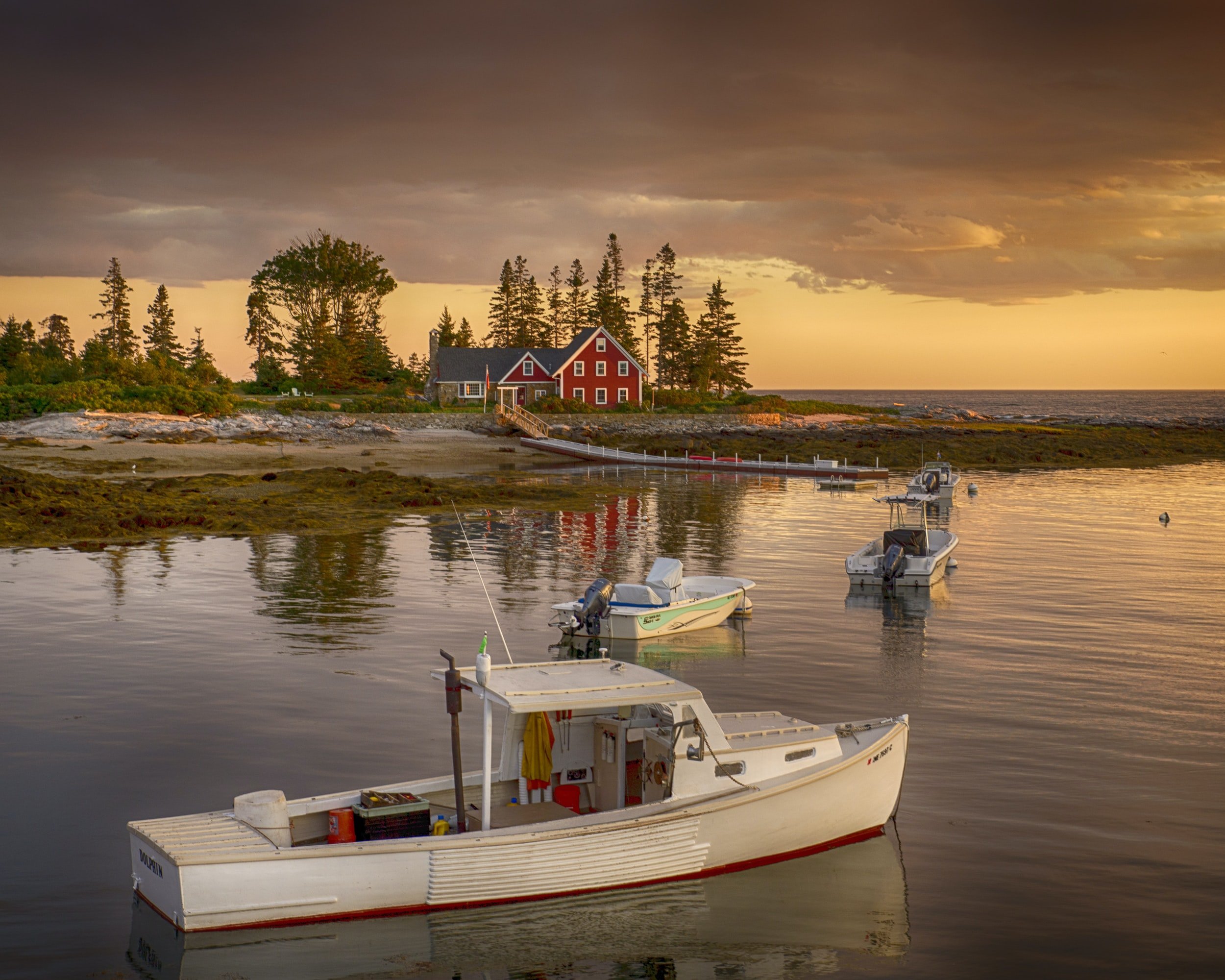
Finding such a large and active group of teachers and practitioners of shamanism in one of the least populous states in the US was pleasant, yet puzzling to me. Maine also happens to be the least ethnically diverse state, with the oldest average population. To say it plainly, Maine is mostly full of older white people.
Growing up here I was not exposed to a lot of "non-Western" spiritual thought. Yoga and meditation were rare. There may have been one metaphysical bookstore that I was aware of, and the "Satanic Panic" when I was a boy scared most folks away from anything outside of mainstream religion.
So it was a little puzzling for me to find out the community here is so large. I have spoken to others from much larger states who have had difficulty finding a community there.
Maine's Deep Connection To Nature
Shamanism is a path of wholeness and connection. It is about our deep relationship with self, others, nature, and spirit.

Maine is a state of amazing natural beauty and resources and many people here live in close relationship to nature. Our natural resources, from fishing to forestry employ a lot of people here. A lot of our tourism comes from our beaches, ski slopes, and pristine hiking and camping areas. Maine has 3,000 miles of coastline.
Of course, Maine is also the home to L.L. Bean, the world-famous outdoor outfitter.
It seems natural to me that shamanic people who love to spend time in nature might choose to incarnate or move to a place just like Maine. Access to nature is close by to everyone, even those who live in cities like Portland or Augusta. I have even been on a guided foraging walk in Portland where there were lots of edible plants to be found.
Maine's Fierce Independent Nature

Mainers are kind of a unique bunch. My grandmother will turn 106 this year - she was born in Maine in 1916. She is fierce. Back then there were few hospitals (almost everybody was born at home). There were no stores where she lived - they bought everything from meat to clothing from the back of wagons. There was no public transportation, and unless you were wealthy, no cars or horses - you walked everywhere you needed to go.
When I think about what it took to survive in Maine's rugged wilderness before that, it's easy to understand Mainer's propensity for self-reliance.
Though shots were never fired, Maine also once kind of declared war on the UK over disputed territory along the Canadian border. It makes me chuckle a little to think of my ancestors thinking they could take on the British Empire, but there you are.
I believe this independent, self-reliant nature contributes to the growth of the shamanic community here. Shamanism is a path of direct revelation - meaning you get your own answers and don't rely on any human authority. We have a healthy distrust of authority here.
Finding Shamanic Healing in Maine
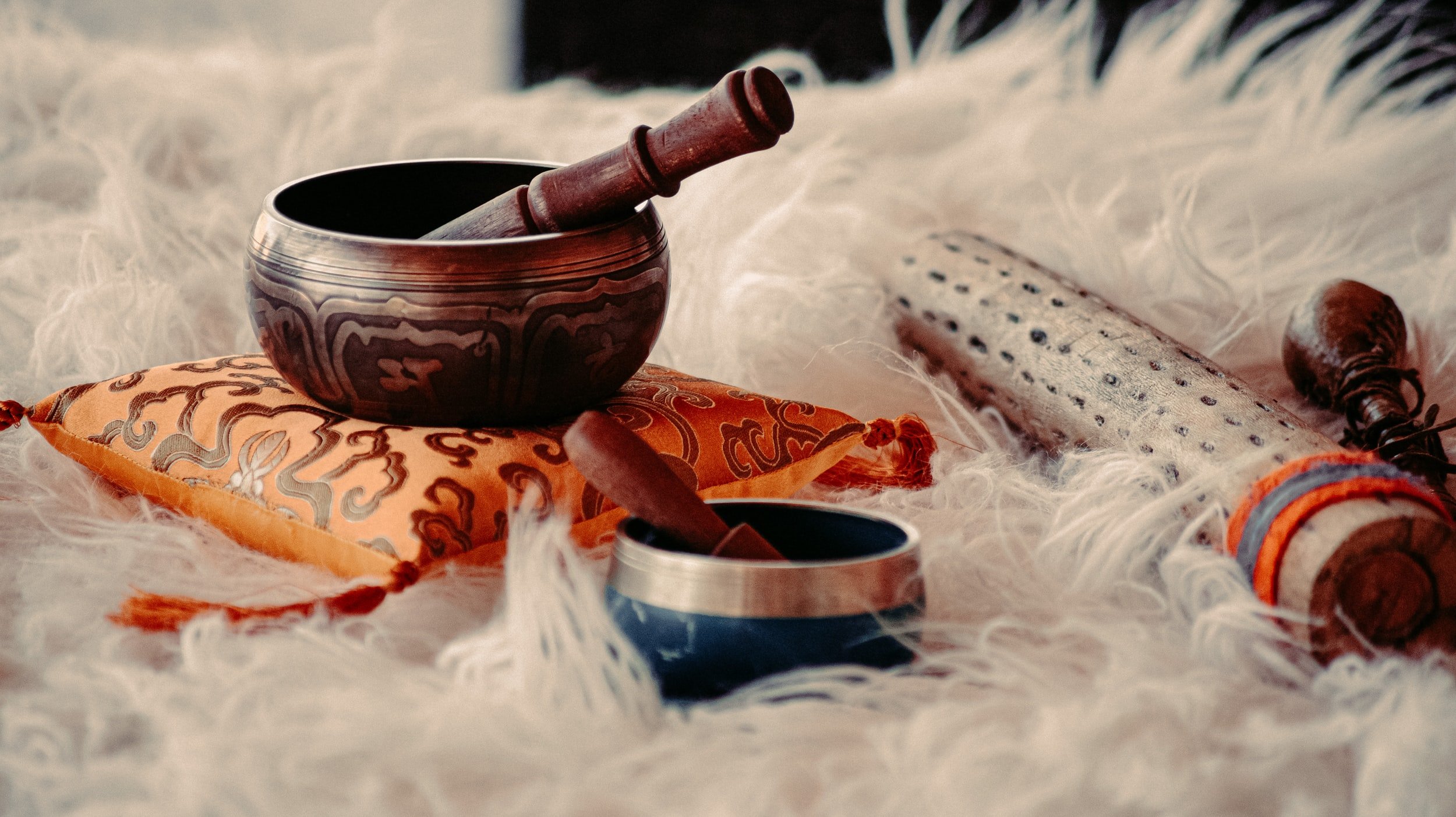
Most shamanic healers practicing what we call core shamanism do not go by the title of "shaman." The teaching says that one does not apply the title of "shaman" to oneself. It is something that is bestowed by the community.
Depending on what I am doing (teaching, coaching, or healing) I may refer to myself as a shamanic practitioner, teacher, or spiritual coach. Sometimes I'll use the term shamanic healer. I promise I'm not trying to confuse anybody. There aren't formal titles, so I try to describe myself using terms that show the role that I'm playing.
If you are looking for a healer using Google, you can try to search for shamanic healing or shamanic practitioners. There may be Facebook groups or pages where you can get in touch with people in the community
No Shamanic Practitioner is Good at Everything
Shamanism is an incredibly broad area of study. Unlike some modern forms of energy healing that can be learned in a short period of time, training as a shamanic practitioner can take years. Beyond that, most practitioners will choose to focus on things they're drawn to due to life experience or interests.
For example, in the first couple of years of my practice, 100% of my clients came to me for help with trauma. Having studied shamanism in order to work through my own PTSD, there was a "wound resonance." And soul retrieval, the shamanic treatment for trauma, still is a specialty of mine.
An ethical practitioner will refer you to a trusted colleague if you are looking for something they don't do. I love animals, but I do not have experience in animal communication - I would refer you to someone else to work with a pet. I know practitioners who choose not to work with possession cases - they will refer. I have had other practitioners refer clients to me with sexual issues because they were not comfortable.
This is one of the really nice things about the Maine shamanic community - most of us have numerous practitioners to refer people to if they would be better served by someone else.
Do I need to find a shaman near me?
Many people prefer to see a healer in person, but the truth is that shamanic healing works well long-distance as well. I see clients from all over the world via Zoom. Shamanic healing happens on the level of the soul body where time and space kind of break down.
Since the pandemic, I, and many others, have switched to exclusively virtual appointments for long-distance healing sessions. In my experience that works just as well as in-person healing.
I like to see my clients when I speak to them, but I know others who have done sessions by phone for many years. So no, you don’t necessarily need to find someone close by, but sometimes clients like knowing I’m in the same state.
How Do I Become a Maine Shaman?
I believe that the practice of shamanism is everyone's birthright. If you are a human being, it is highly likely that you have ancestors from a shamanic culture. Recent EEG research studying 500 practitioners during a shamanic journey showed that they entered a unique brain state. Our brains are wired for shamanic journeying, so clearly there was an evolutionary advantage in humankind's distant past that made journeying something most people can do.
If you are interested in learning more about shamanism or even someday becoming a shamanic practitioner, you have a number of options.
The three basic options for learning shamanism are:
Group classes - either in person or over a videoconferencing (such as Zoom)
From books, videos, or audio recordings
Learning to journey from books and videos is a bit like learning karate from books. You might get the gist, you may have some success, but there will be nobody there to help you correct things. There is a lot of discussion in shamanic training. As a teacher, I am watching my students constantly on a physical and nonphysical level to ensure the greatest chance of success. It's not the best approach for beginners, and not what I'd recommend,
One-on-one mentoring for shamanic studies is a fantastic option if it works for you. You have the undivided attention of a teacher for short sessions. This can speed up learning significantly. I love mentoring students because I can also customize their learning to focus on areas that most meet their goals. The drawbacks to mentoring can be the cost and not having a community of learners around you.
Group classes are another great option. From Introduction to shamanism workshops to shamanic apprenticeships and beyond - having a cohort of students studying the same thing with the same teacher gives you people to depend upon. Most of my years of study have been with cohorts of other students. It's good to have other people to practice with as well. the drawback is that you have to go at the same pace and study the same things as everybody else.
Learning to Journey

The most important thing you have to learn to begin with is shamanic journeying. Fortunately learning the basics of journeying is not difficult and can usually be learned in a weekend introductory class or in a few mentoring sessions. Most people start out by taking a 2-3 day Introduction to Shamanism Class, or by finding a mentor to teach them one-on-one.
There are video courses and books where you might learn shamanic journeying, but I think these have limited value. Frequently students of shamanism need corrections, clarifications, and troubleshooting. This is why seeking a qualified teacher is really your best bet.
I spent several years of trial and error with real students to a method of teaching journeying that has shown that gives first-timers the greatest chance of success. This came from teaching Intro classes for a few years and seeing a couple of students in each class struggle in the beginning. Once in a while, a student would go through the whole weekend class and not be able to journey.
It took talking to other teachers, a couple of decades of experience with adult learners, and research into teaching methodology to hone in on this method. As a teacher of shamanism, I'm very proud of my students, and I am always very happy when they are able to journey without struggle
One-on-one mentoring is going to give you the most individualized instruction, but there are also advantages to being in a circle with other learners.
Training to be a Shamanic Practitioner
When I first started out in shamanism, I had no intention of working with anybody else. The Universe had other intentions. I did not hang out a shingle as a shamanic practitioner until I had undergone years of training. If you think you want to work with other people, always do so ethically, and make sure you have enough training to do so.
We do not let first-year med school students open up a practice and start working on patients. There's no licensing board for shamans, but ethically you should be able to handle the things you're likely to run into.
For me, I did a year-long apprenticeship, a two-year initiatory training, specialized training in wound healing, curse unraveling deposession, and soul-retrieval before I saw clients for healing work. Along the way, I learned past and parallel life healing, ancestral healing, Medicine for the Earth, healing with planetary energy, and some other really specific forms of healing. Like medical professions, I constantly seek continuing education to serve my clients and students the best that I can.
Finding a Shamanic Teacher in Maine
Whether you are looking for a workshop or class in shamanism or looking for a mentor, there are a few things you should consider.
First off, the fit is extremely important. Fit is hard to measure, but it includes things like:
Do I trust this person? What are their ethics? In shamanism, ethics are critical, particularly between student and teacher. While it can be difficult to get a full picture of someone from an initial conversation, you can get a feel. Is this person honest and upfront about everything? Are they too salesy or pushy? Do they talk badly about others? If anything about your interaction with a potential teacher makes you nervous, they should welcome you asking about it and be able to answer without getting defensive.
Do the real-world arrangements work for me? Every teacher works differently, so look to things like schedule, costs, etc. How does it work with your life? You're not going to be very successful if you sign up for classes you can't attend or get into a mentoring arrangement that you can't afford.
How is the personality fit? Again, all shamanic teachers are completely different. A weekend class is one thing but think about if you can learn from someone before entering into a long-term teaching relationship with them. Are they adaptive to your needs? I am somewhat extroverted and I have students who are somewhat introverted. I adapt my approach for them so they are safe and comfortable.
Your safety - mind, body, and spirit - need to be a shamanic teacher's #1 concern.
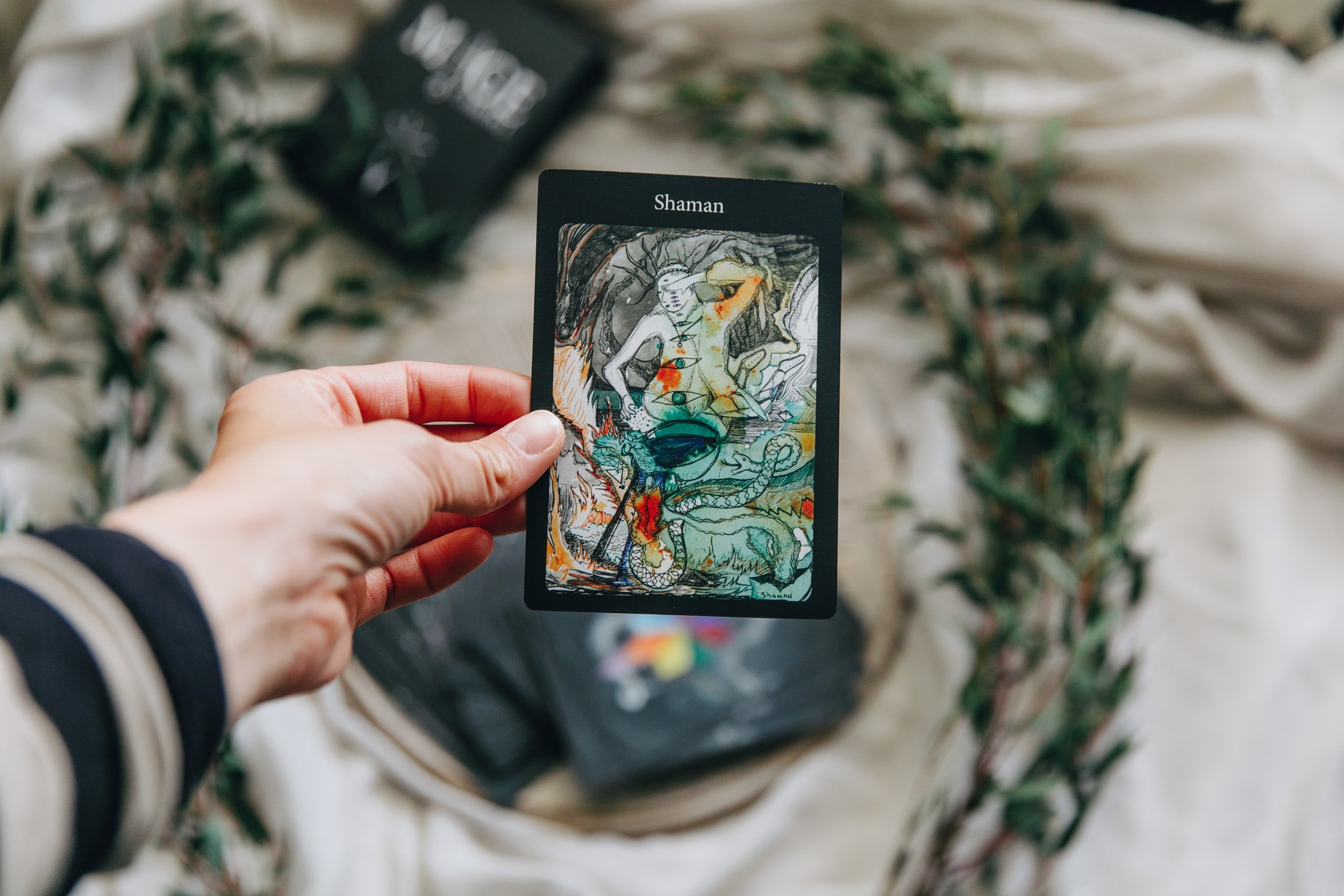
Training in shamanism, like any spiritual practice, can bring up strong emotions, shadow material, even surface some past traumas. If this happens in a safe container created by a compassionate teacher, this can be healthy. However, a teacher should not push you or re-traumatize you on purpose.
If you experience difficulty processing emotions that come up during training or have any cognitive or health repercussions, an ethical teacher will recommend you seek professional help.
Anyone acting in a capacity as your shamanic teacher or mentor should not also be acting as your physician or therapist. Even if they are licensed professionals, confusing those relationships is not healthy. A caring teacher will be concerned for your wellness. They will not recommend you change any medical or mental health course of action without consulting your doctor or other professional.
To summarise, a shamanic teacher should strive for a deep understanding of your personality and be adaptive to your needs. They should also be concerned for your safety and wellbeing. Make sure you feel safe and comfortable with the teacher before enrolling in classes or entering into a mentoring arrangement.
The Future of Maine Shamanism
The future of shamanism in Maine is very bright indeed. As the community grows and forms more connections, I see drumming and journeying circles being formed classes, and Facebook groups. I am personally working on projects with others to support the community. I see others doing the same.